
Going Direct
One lender. One set of criteria.
- One lender to consider
- One credit policy
- Limited finance structures
- You manage the process yourself
- No wider lender comparison
One finance check. Compare equipment finance options across 70+ lenders - matched to your business profile. No impact on your credit score. No obligation.
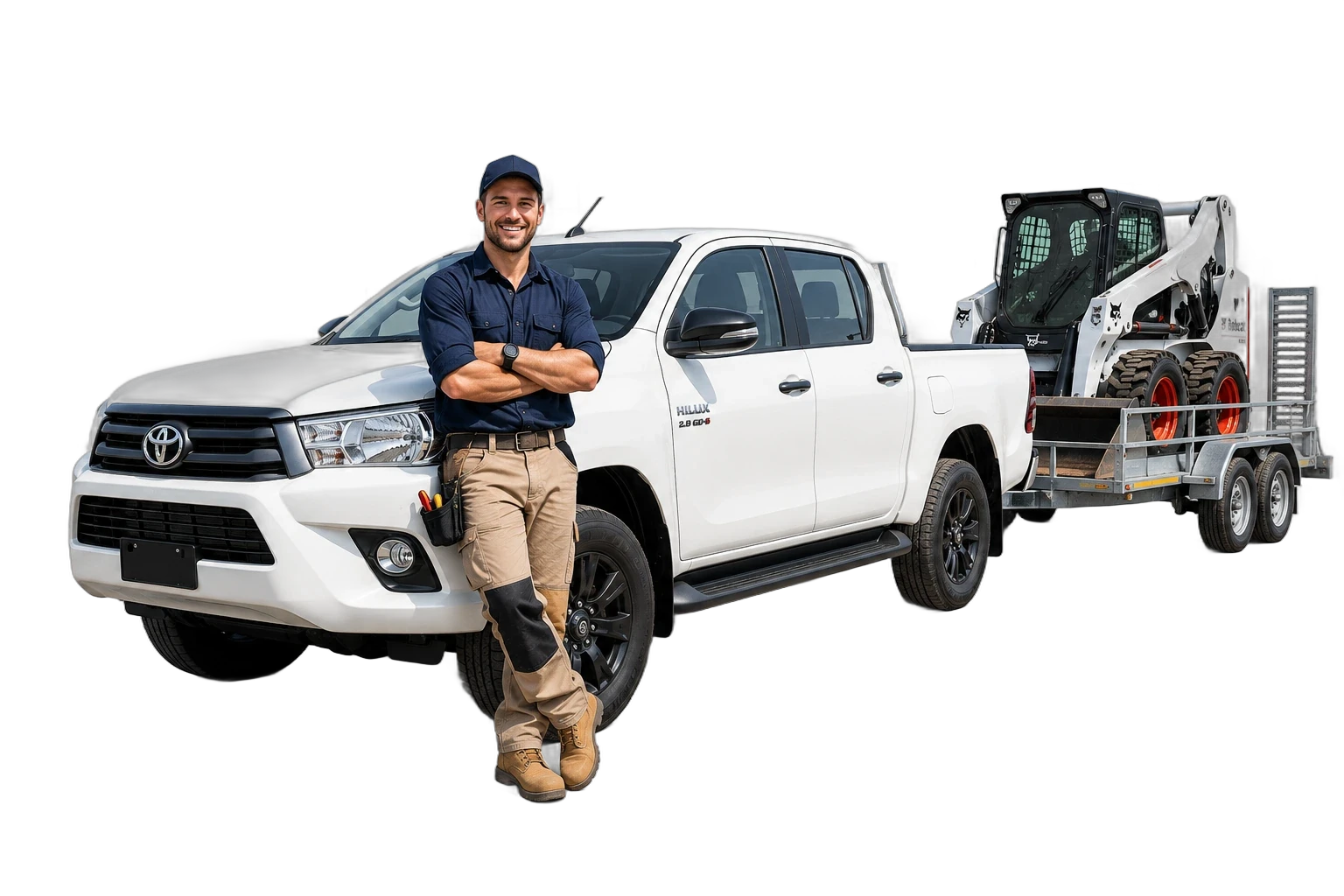




























The same straightforward process, every time — no matter what you’re financing.
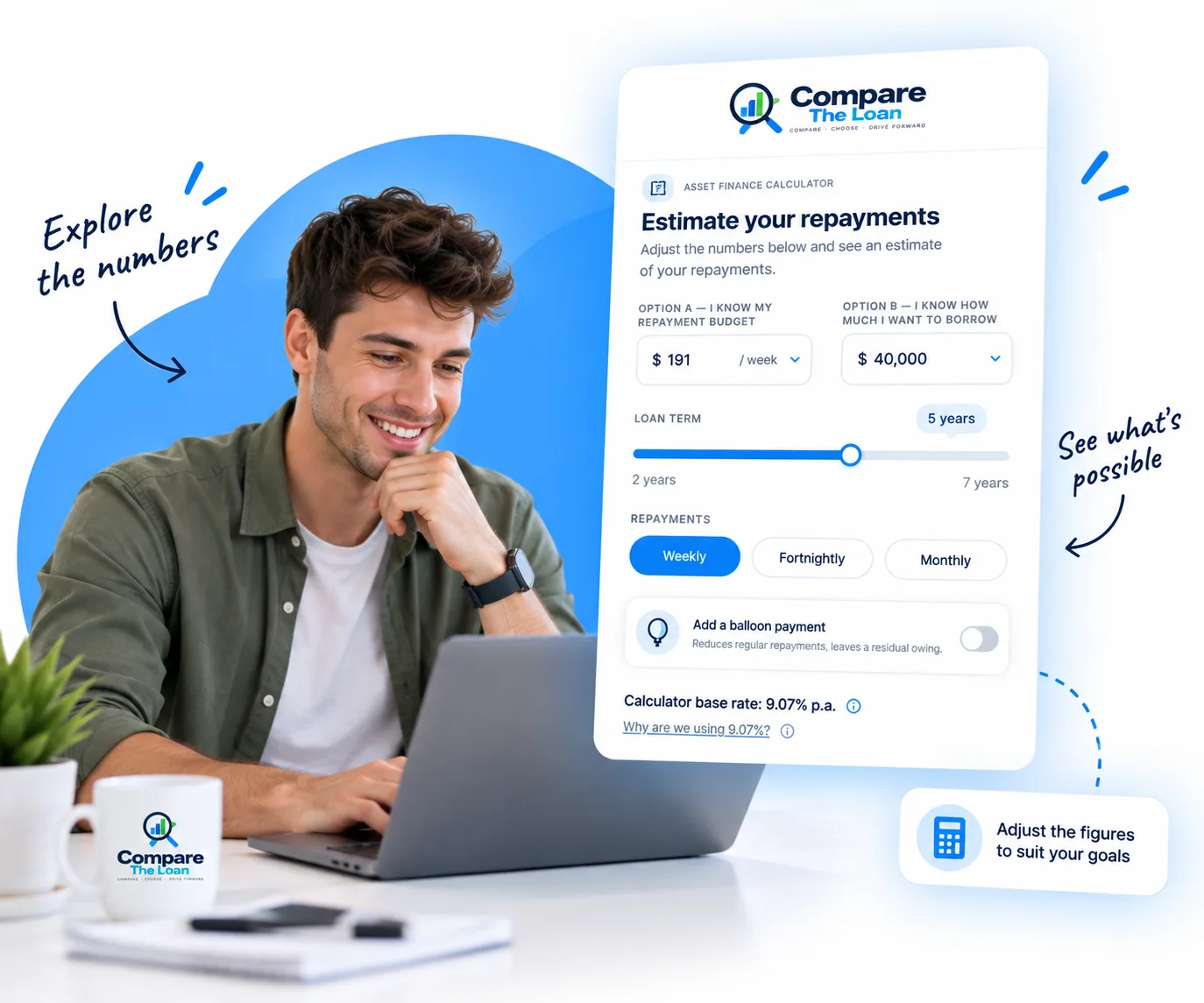
Explore a few scenarios before you compare — adjust the loan amount, term and repayment frequency to see how the numbers could look.
Adjust the numbers below — the estimate updates instantly.
Base rate vs comparison rate
Base rate is the interest rate applied to the loan balance. Comparison rate includes the base rate plus most fees and charges, giving a more realistic all-in cost when comparing loans.
This calculator uses a base rate for estimates. When comparing loan options, consider the comparison rate as well.
This calculator uses a fixed 7.05% p.a. base rate based on the Reserve Bank of Australia's average interest rate for new small-business loans in June 2026.
This is a general small-business lending benchmark and is not an average equipment finance rate. The rate you receive may be higher or lower depending on your business, asset, loan structure, security and lender.
Figure referenced: June 2026.
Source: RBA – Lenders' Interest Rates: Business Rates →$183/ week
Nice! You've found your comfort zone.
Now let's compare 70+ lenders to discover your borrowing power, rates and repayments.
No impact on your credit score
Checking your options won't affect your credit score.
Disclaimer: This calculation is a guide only and is based on limited information provided, excluding fees and charges. It does not constitute loan approval or a recommendation. Actual rates, fees and repayments depend on your circumstances and information verified during assessment. A balloon payment reduces regular repayments but leaves an amount payable at the end of the loan term.
The same equipment finance product, compared across 70+ lenders, whichever purchase scenario applies to your business.
Equipment finance is a business finance product - for sole traders, partnerships and companies acquiring machinery, tools or vehicles for a genuine business purpose.
For businesses with a solid trading history acquiring machinery, tools or vehicles, assessed on trading history, cash flow and existing commitments.
A shorter trading history is not an automatic exclusion, but usually means a lender will ask for more detailed financial information.
For single-operator businesses financing trade tools, utes or machinery needed for day-to-day work.
Using an equipment finance broker in Brisbane lets you compare equipment finance options from multiple lenders instead of being limited to one lender's products and lending criteria. Compare The Loan compares your business profile across 70+ lenders to identify options that may suit your circumstances, with a licensed finance broker helping you understand your options before you decide whether to proceed.
Going Direct
One lender. One set of criteria.
Compare The Loan
One enquiry. 70+ lenders to compare.
We're currently collecting reviews from Brisbane equipment finance customers — check back soon.
Customer reviews coming soon.
Customer reviews coming soon.
Customer reviews coming soon.
Compare The Loan launched five years ago, but it's backed by Sean Burt's 26+ years of Brisbane broking experience and close to 2,000 completed applications. Every enquiry is compared across 70+ lenders with a soft credit check first — no branch visit required.
Compare structures suited to how your business wants to own or use the equipment.
Sole traders, partnerships and companies with a genuine business purpose can apply.
Compare your options across 70+ lenders without a hard credit check.
Built on Sean Burt's long-standing finance broking career.
Compare The Loan is a Brisbane-based finance broker helping businesses compare equipment finance options right across South East Queensland - from Redland City's bayside commuter suburbs and island communities, to Logan City's Brisbane-Gold Coast commuter corridor, to Ipswich's fast-growing Ripley and Springfield growth areas. Wherever your business is based, we compare your options across a panel of 70+ lenders.
Compare Equipment Finance OptionsYou don't need to use a supplier's in-house finance to get a great deal. We arrange equipment finance for machinery, tools and vehicles bought new, used or privately, anywhere across our service area, comparing 70+ lenders regardless of where you found your equipment.
Buying brand new? We arrange your finance independently of the supplier's own offer.
Financing used or second-hand equipment through a supplier works the same way, wherever you're buying from.
Buying privately? We can still help arrange finance for the purchase.
Common questions about comparing equipment finance with Compare The Loan.
Equipment finance is a business finance product that lets a business acquire machinery, tools, vehicles or other commercial assets without paying the full price upfront, repaying the cost over a fixed term instead. Structures include chattel mortgage, finance lease and hire purchase. The equipment typically secures the finance, and who holds legal ownership — and when — depends on which structure is used.
A chattel mortgage generally gives the business ownership at settlement with a security interest registered against the asset; a finance lease has the financier retain ownership during the lease; hire purchase transfers ownership once all payments are made. These differences affect who is responsible for the asset, how repayments are structured, and how the arrangement may be treated for accounting and tax purposes — a business should confirm the details of each structure with the lender or their accountant.
A newer business isn't automatically excluded from equipment finance, but a shorter trading history usually means the lender will ask for more detailed financial information to assess the application. Lenders weigh trading history alongside cash flow, credit history and the type/value of equipment. Some lenders have minimum trading-time requirements; these vary by lender.
No. An ABN and a genuine business purpose are basic requirements to apply, but every application is still individually assessed on factors like trading history, cash flow, credit history and the equipment itself. This distinction matters because equipment finance is commercial rather than consumer credit, but commercial status alone doesn't remove the need for the lender's normal credit assessment.
At minimum, an ABN and business registration details, ID for the applicant and any guarantors, a supplier quote or tax invoice for the equipment, and recent business bank statements. Larger amounts, newer businesses or specialised equipment often require additional documents such as BAS, financial statements or tax returns, and details of existing business liabilities.
No. Equipment finance can generally be used for new or used equipment, though individual lenders may set limits on the age or condition of used equipment they'll finance. The type, age and value of the equipment is one of the factors a lender considers when assessing an application and setting terms.
A financier's security interest in equipment used as collateral is typically registered on the Personal Property Securities Register (PPSR), a public register that records interests in personal property. PPSR registration helps protect the financier's interest and lets other parties know that an asset is subject to a registered security interest — relevant, for example, if the equipment is later sold or if the business seeks further finance against it.
Small businesses may in some cases be able to access instant asset write-off or other depreciation concessions from the ATO for equipment used in the business, but thresholds and eligibility dates change and should be confirmed directly with the ATO or a tax adviser. This is general background only, not tax advice — specific thresholds, dates and eligibility criteria are set and updated by the ATO and shouldn't be assumed to apply without checking current rules for the relevant financial year.
Sole traders, contractors, partnerships and companies with an ABN can generally apply, provided the equipment is for a genuine business purpose. The business structure itself doesn't determine eligibility as much as the trading history, income/cash flow, credit history and the equipment being financed do.
Compare car, boat, caravan, motorcycle, equipment and personal loan options across 70+ lenders — with a licensed finance broker on hand and no obligation to proceed.